Autosomal Recessive Intellectual Disability in Consanguineous Pakistani Families
Maroosha Tabassum and Uzma Abdullah*
Published Date: 2025-11-25DOI10.35841/2471-1786.11.2.163
Maroosha Tabassum and Uzma Abdullah*
Department of Biochemistry, PMAS Arid Agriculture University, Rawalpindi, Pakistan
- *Corresponding Author:
- Uzma Abdullah Department of Biochemistry, PMAS Arid Agriculture University, Rawalpindi, Pakistan E-mail:
Received date: September 18, 2024, Manuscript No. IPCDD-24-19659; Editor assigned date: September 20, 2024, PreQC No. IPCDD-24-19659 (PQ); Reviewed date: October 10, 2024, QC No. IPCDD-24-19659; Revised date: April 18, 2025, Manuscript No. IPCDD-24-19659 (R); Published date: April 25, 2025, DOI: 10.35841/2471-1786.11.2.163
Citation: Tabassum M, Abdullah U (2025) Autosomal Recessive Intellectual Disability in Consanguineous Pakistani Families. J Child Dev Disord Vol:11 No:2
Abstract
Intellectual disability, a neurodevelopmental condition, is defined by restrictions in intellectual and adaptive behavior. It must be diagnosed before the age of 18 years. The clinical criterion for intellectual disability is an IQ score of 70 or below. The genetics cause almost 50% of ID. In the case of Non-Syndromic ID (NS-ID), which manifests the disease as a sole disability, has more than two hundred candidate genes identified till date. The Autosomal Recessive ID (ARID) genes are not prevalent in the genome, complexes of proteins and the functions of the specific proteins are remarkably diverse. Therefore, few genes at the first step of diagnostics cannot be picked. Using advanced sequencing techniques, such as Whole Exome Sequencing (WES) and Whole Genome Sequencing (WGS), will contribute to the identification of known genes, novel genes, or mutations co-segregating with the disease in the Pakistani population. Some ARID genes that have been reported are SMPD1, SPG11, ASPM, CEP290, POLG, CEP290, POLG, LAMA2, MUT, GALT, VPS13B, ASPM, and GLDC. In the past few months, this evidence has been steadily increasing that ARID genes are pleiotropic so the occurring phenotypes could encompass a wide spectrum. Research must be conducted at the gene level rather than counting on large meta-analyses. The focal point of this research is to characterize clinical heterogeneity in ID families, and the identification of disease-causing variants that will play a role in early ID diagnosis, and development of prenatal testing, and will also provide a definite understanding regarding the molecular mechanisms of ID.
Keywords
Intellectual disability; Genetic; Syndromic; Bioinformatics; Adaptive behavior; Neurodevelopmental disorder
Introduction
Intellectual Disability (ID), is a neurodevelopmental condition, characterized by limitations in adaptive behavior and intellectual functioning, also known as mental retardation. Several skills necessary for everyday life, such as self-care, communication, social skills, and the capacity to successfully interact with others, are referred to as adaptive behavior, and on the other hand intellectual functioning refers to the overall mental capacity for learning, abstract thinking, understanding complex ideas and perceptual reasoning. Intellectual disability typically manifests during childhood and persists throughout an individual's lifespan. ID is a dynamic disorder, which varies with the changes in environmental support and etiology. It occurs before the age of 18 years, which makes it specifically a developmental disorder and not a cognitive disorder, such as dementia. The predisposing factors for developmental disorders span a wide range and can be classified into categories such as multiple pregnancies, maternal age above 30 years, malnutrition, preterm birth, and high birth order. The etiology of ID is heterogeneous, incorporates chromosomal aberration, pre-birth exposure to poisons or diseases, complications during labor, single gene mutations, delayed brain development, wounds, or contaminations.
It is essential to understand that intellectual disability is not a form of mental illness like depression, and it also cannot be acquired from someone else. In the last decade, researchers have observed that the genetic basis of ID is predominantly autosomal dominant (caused by changes in dominant genes) in countries with diverse populations, such as the USA and Western Europe. Conversely, in countries where consanguineous marriages are prevalent, there is an elevated prevalence of autosomal recessive intellectual disability.
The brain is a complex and sensitive organ. ID is related to abnormal functional and structural growth of the brain. To identify the structural anomalies in the brain a study had been conducted on 40 children with ID and 40 healthy controls. This study employed Functional Connectivity (FC) and Voxel-Based Morphometry (VBM) tests. The findings of this study showed areas of the brain affected in ID. There was a significant decrease in total grey matter and white matter volume in brain. The VBM analysis showed increased GMV in the bilateral orbital part of the inferior frontal gyrus, dorsal medial prefrontal cortex, right cuneus, and bilateral middle frontal gyrus in children suffering from ID.
The clinical criterion for intellectual disability is an IQ score of 70 or below. An official or formal diagnosis is made right after the IQ test if the results show an IQ score of less than 70. ID is classified into four levels depending on the IQ. Intellectual disability is classified into mild, moderate, severe, and profound ID. Syndromic and non-syndromic ID are two of the primary kinds of this disease. In non-syndromic ID, the individual only experiences mental retardation, though in syndromic ID, the individual experiences a few other genetic or metabolic abnormalities, for example, skeletal deformities, eye disorders and neurodevelopmental disorders. alongside mental retardation. Various co-existing conditions influence the severity of intellectual disability. Some of these conditions include Turner disorder, Tay-Sachs disease, fragile X syndrome, rubella (German measles), Cytomegalovirus (CMV), Phenylketonuria (PKU), Rett syndrome, Prader-Willi syndrome, cerebral palsy, Klinefelter disorder, epilepsy, down syndrome, and neurodegenerative disorders.
Studies have shown that Intellectual Disability (ID) exhibits higher heritability compared to other diseases. However, due to the high genetic and clinical heterogeneity of ID, reliable and specific literature is lacking, leading to poor or absent diagnosis in many cases. Genetic studies have now enabled the most reliable unbiased approaches, which are genome wide. Next- Generation Sequencing (NGS) has opened new avenues for identifying novel genes associated with Intellectual Disability (ID). Several diagnostic tests for ID are being developed through NGS, and improvements in genetic testing for entire families have also been observed. Prenatal and carrier screening have also advanced due to these technological advancements.
There is a lot of literature available on autosomal dominant and X-linked intellectual disability. autosomal recessive intellectual disability is still behind and lacks that certain kind of focus in research. The primary reasons are its genetic heterogeneity and lower prevalence in outbred populations. Identifying Autosomal Recessive Intellectual Disability (ARID) genes requires large-scale meta-analyses, as there are no prevalent genes that can be easily targeted for sequencing. The addition of tandem repeats can contribute to a variety of IDassociated disorders, including X-linked ID. As per Skuse and Nguyen and Disteche, X-linked genetic disorders are believed to be the reason for 10% of ID in men. This suggests that there may be different genes responsible for the higher prevalence of Intellectual Disability (ID) in males compared to females. Currently, the etiology of intellectual disability remains unclear in up to 60% of cases. ARID has an over-proportionate fraction the families who had cousin marriages. It is scarcely observed in the outbred cases, which is 3.6% of all the ID population. In this 3.6%, half of them is suggested to have arisen due to the de novo mutations. There are 378 ARID genes that have been identified. The most frequently reported genes are ASPM, CEP290, GALT, GLDC, LAMA2, MUT, POLG, SETD1A, SMPD1, SPG11, and VPS13B. This study aims to explore the genetic causes of ID in the local population of Pakistan.
Material and Methods
Development of questionnaire and ethical approval
The research work in this study was ethically approved by the Ethical Committee of PMAS-Arid Agriculture University Rawalpindi. For the preceding data collection, the primary questionnaire was designed.
Biological sample collection
Three families were sampled for clinical and genetic examination. These families were associated with different regions of Pakistan. Blood samples of the couple and their children in EDTA-coated tubes were collected, found to be suffering from intellectual disability.
Extraction of genomic DNA from blood sample
DNA was extracted from the blood sample through a genomic DNA extraction kit and phenol-chloroform method described by Sambrook and Russell. It was started by taking 400 μL of Cell Lysis Buffer (CLB) in a pre-labeled Eppendorf tube, 400 μL of EDTA/heparin blood was added, mixed by inversion, and centrifuged at 3000 rpm for 5 minutes. The supernatant was discarded, and the pallet was washed with 400 μL CLB and centrifuged at 5000 rpm for 5 minutes. Pellet washing was repeated 3-4 times until reddish coloration due to hemoglobin, has washed out. At this stage, 450 μL Nuclear Lysis Buffer (NLB) and 100 μL of saturated NaCl were added to the pellet and left in the incubator at 37°C for 24 hours. 550 μL pre-chilled chloroform was added and the mixture was centrifuged at 8000 rpm for 3 minutes to get two separate layers. The upper layer/supernatant was taken out carefully, making sure that the micropipette tip did not touch the central layer, and transferred into the newly labeled Eppendorf tube. The supernatant was processed to further DNA extraction and added 1000 μL pre-chilled absolute ethanol was and tubes were incubated at -20°C for 30 minutes.
After the incubation, tubes were centrifuged for 6 minutes at 10,000 rpm; the ethanol layer was discarded. To the resulting pellet, 1000 μL 70% ethanol was added, contents were centrifuged at 10000 rpm for 6 minutes and the ethanol layer was decanted and pellet was allowed to dry completely, making sure that no residual ethanol remained. The pellet was mixed with 100 μL of T.E buffer and left at 37°C for 24 hours for maximum solubilization of DNA [1].
Agarose gel electrophoresis
1% Agarose gel was used to assess the quality of DNA after extraction. To prepare 1% agarose gel, 100 mL of 1X TAE buffer was added to 1 g of agarose and heated in a microwave oven until the agarose completely melts. The mixture was then cooled down slightly and added 0.5 μL of ethidium bromide solution (5 mg/mL stock solution). The gel was poured into casting tray already positioned with sealing stoppers and combs. The combs were taken out carefully after the gel gets solidifies and 1-2 uL of DNA mixed with 1-2 μL of loading dye were pipetted into the wells. Electrophoresis was carried out in IX TAE running buffer at 80 volts for almost 45 minutes or depending upon the dye front. The gel was then visualized and analyzed using Ultraviolet (UV) gel documentation system.
Mutational identification of candidate genes
Whole exome sequencing data was analyzed to assess the mutations. To prioritize candidate variants among the list of variants obtained from WES, a filtering strategy was opted for that is details as follows. Filtration for minor allele frequency: The variants were filtered against an online database of human polymorphisms including 1000 genome and genome, dbSNP, etc., and chosen with MAF below 0.01 [2].
Results and Discussions
Consanguineous marriage is a key factor of reproductive problems which include miscarriages, infant death, or fetal death. Cousin marriage plays a significant role in causing the genetic diseases that are being carried from parents to offspring and enormous birth defects. In Pakistan, there is a very high rate of cousin marriage and about 62% of unions are consanguineous in nature. Also, among 200 million individuals in Pakistan, about 30 million are suffering from various forms of genetic diseases.
Family A
The family we referred to as family A lives in Islamabad, Pakistan. The family has been traced back to 3 generations, containing 2 patients, 2 normal siblings of patients, parents of patients, and grandparents of patients. The family had two more patients, second cousins of the affected individual’s parents. The pedigree (Figure 1) showed an autosomal recessive mode of inheritance of the disorder. Five subjects were sampled from the family including 3 normal and 2 affected individuals.
The pro-band (AV-2) is a 13-year-old male affected individual to a consanguineous Pakistani family whose parents are normal, without any history of neurological disease. The patients are reported to have severe intellectual disability with extremely delayed developmental milestones. He started crawling at the age of 4 years and then walking. He had seizures for the first time at the age of 9 months. He still has seizures at this age, which are followed by body shivers and excessive salivation. There must be someone to look after him as he is unable to take care of himself even at this age. He takes the medicine Epival which is used to control seizures [3,4].
The second affected individual (AV-4) is a 4-year-old female, born to the same parents as AV-2. She is suffering from severe intellectual disability. The first time she had seizures was when she was 2 months old. She still gets seizures and uses medicine Epival to manage them. Her developmental milestones are severely delayed. She started crawling at the age of 4 y. She has not learned to walk yet and drools all the time.
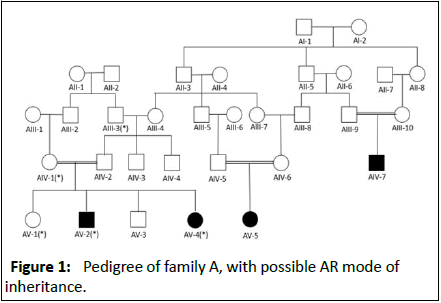
Figure 1: Pedigree of family A, with possible AR mode of inheritance.
Family B
The family we call family B, has been sampled from the city of Lalamusa, Punjab, Pakistan. We tracked down 4 generations of this family up to the grand grandparents of the patient individuals. At the time of information collection, the family includes only 2 affected female patients, 18 unaffected individuals and 4 unaffected deceased individuals. The pedigree inspection suggests it is an autosomal recessive pedigree as there is no family history of any neurological disorders. The blood samples we took included only 3 members, 2 affected individuals and their unaffected mother [5].
The pro-band (BIV-3) is a 12-year-old, affected female, who was born to consanguineous parents of a Pakistani family with no history of the disease. The affected female has a height of 135 cm and a head circumference of 53 cm. She was delivered normally and had normal speech. She is suffering from moderate to severe intellectual disability. Her developmental milestones are delayed. She started holding her neck at the age of 1 y and learnt to walk without support at the age of 3 y. She is enrolled in a school for special children's education but even after 4 years of learning she still does not recall ABC [6]. She gets seizures every time she becomes feverish. She does not use any medication for seizures.
The other affected individual (BIV-5) is a 7-year-old female, born to the same parents as Pro-band. Her height is 118 cm and her head circumference is 49 cm. She was delivered normally. She suffers from severe intellectual disability. She started rolling over at the age of 1.5 y and started walking without support at the age of 3.5 y. She has normal speech. She has also been enrolled in school for over 3 y, but still just learned to count from 1 to 5. She gets seizures every time during fever. She is taking anti-epileptic medications (Figure 2).
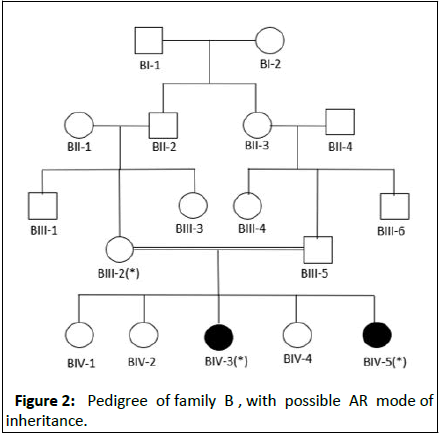
Figure 2: Pedigree of family B , with possible AR mode of inheritance.
Family C
The family we named as family C, lives in city Kharian, Punjab, Pakistan. We traced back this family to two generations as the parents of affected individuals were distant relatives and had same caste. At the time of data collection, the family had 5 individuals among which 3 were unaffected and 2 were affected. The affected ones are siblings. The pedigree investigation shows this family as an autosomal recessive family as there wasn’t any history of brain disorders in the previous generations. The blood samples were taken from 4 individuals, including two affected individuals and their unaffected parents.
The pro-band (CII-1) was a 12 y old male, who was given birth by consanguineous parents in a Pakistani family, who have no history of any neurological disorder. He has a height of 135 cm and a head circumference of 49 cm. This individual suffers from severe intellectual disability. He has speech impairment, and only utters a few words. He has delayed responses and shows no aggression at all. He has delayed developmental milestones and is also unable to focus on things. He started walking without support at the age of 2 yrs. He has flat feet and is out-toed. He had chest infection for up to 3 yrs. He is enrolled in a school for special education but learnt nothing in 6 yrs [7].
The other affected individual (CII-2) is an 11 y old female, who was given birth by the same parents. Her height is 134 cm and her head circumference is 48 cm. the mother had normal delivery while giving birth to her. Her birth weight was lower than normal. She hadn’t had any solid food up till 6 yrs of age. Her developmental milestones were seriously delayed, as she learnt independent sitting at the age of 2 yrs and walking at the age of 3 yrs. She suffers from severe intellectual disability and speech impairment. She can utter words but is unable to complete the sentences. It has been 7 years since she is attending her school but still did not learn the etiquettes of hand washing even and is an aggressive child. She fell victim to recurrent chest infections (Figure 3).
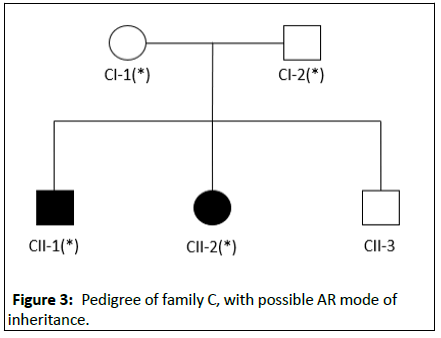
Figure 3: Pedigree of family C, with possible AR mode of inheritance.
Family D
The family we labeled as family D, lives in the village of Ali Chak, Punjab, Pakistan. We backtracked this family to 4 ages. At the time of information collection, the family was comprised of two affected individuals, 13 unaffected alive subjects, and 3 unaffected deceased individuals. The pedigree suggests the mode of inheritance of this disease as autosomal recessive, as both parents were normal and there is no family history of any kind of brain disorders. Four subjects were sampled from this family, including 2 unaffected parents and 2 affected individuals.
The pro-band is a 12 y old male, who was birthed by consanguineous parents of a Pakistani family. At the hour of clinical history collection, his height was 130 cm and his head circumference was 48 cm. He was delivered through C-section. He has severe intellectual disability as he learnt nothing after being enrolled in a school for over 5 years. He had delayed developmental milestones such as he started holding his neck at the age of 1 yr and learned to walk at the age of 5 yrs. He also suffers from knee dislocation which is followed by trouble walking. Speech impairment has also been observed, as he can utter only a few words. Protruding ears have also been observed. He cannot sleep for longer periods of time, the longest he had been in a sleep was 1 hour. He suffers from recurrent chest infections and has seizures once in his life [8].
The other affected individual is a 7 y old male, who was birthed by the same family. While gathering clinical information his height was 123 cm and head circumference was 50 cm. the mother has C-section while giving birth to him. He is suffering from severe intellectual disability. The developmental milestones were observed as delayed. He learned to walk without support at the age of 2 yrs. Speech impairment has been noticed, as he is unable to speak. He also has crooked teeth and protruding ears [9]. He has seizures every time he gets a fever, he is also taking anti-epileptic medications to manage and control seizures (Figure 4) [10].
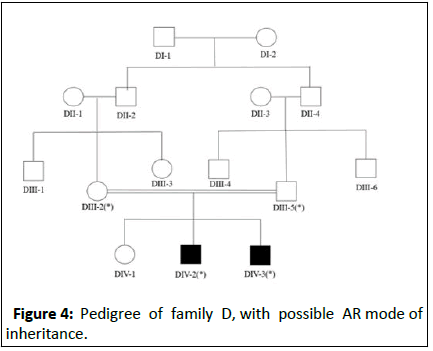
Figure 4: Pedigree of family D, with possible AR mode of inheritance.
Conclusion
This examination will open new doors of research on the roles of numerous different genes in NDDs and discover other appendages. This exploration will aid patients and their families by facilitating informed decision-making, enhancing personal control, and reducing psychological distress. Identifying the genetic cause of a condition can elucidate disease prognosis, assess recurrence risk within a family, and enable precise diagnosis of hereditary disorders. Additionally, a definitive genetic diagnosis may streamline the acquisition of relevant reagents and facilitate more targeted therapeutic interventions.
Funding
No funding was used for this study.
References
- Crowe A, Averett P, Glass JS, Dotson-Blake KP, Grissom SE, et al. (2016) Mental health stigma: Personal and cultural impacts on attitudes. J Couns Pract 7:97-119
- Gilissen C, Hehir-Kwa JY, Thung DT, van de Vorst M, van Bon BW, et al. (2014) Genome sequencing identifies major causes of severe intellectual disability. Nat Genet 511:344-347
[Crossref] [Google Scholar] [PubMed]
- Harripaul R, Noor A, Ayub M, Vincent JB (2017) The use of next-generation sequencing for research and diagnostics for intellectual disability. Cold Spring Harb Perspect Med 7
[Crossref] [Google Scholar] [PubMed]
- Harris JC (2006) Intellectual disability: Understanding its development, causes, classification, evaluation, and treatment. Oxford University Press.
- Iwase S, Bérubé NG, Zhou Z, Kasri NN, Battaglioli E, et al. (2017) Epigenetic etiology of intellectual disability. J Neurosci 37:10773-10782
[Crossref] [Google Scholar] [PubMed]
- Jabeen N, Malik S (2014) Consanguinity and its sociodemographic differentials in Bhimber district, Azad Jammu and Kashmir, Pakistan. J Health Popul Nutr 32:301
[Google Scholar] [PubMed]
- Jamra R (2018) Genetics of autosomal recessive intellectual disability. Med Genet 30:323-327
[Crossref] [Google Scholar] [PubMed]
- Karam SM, Barros AJ, Matijasevich A, Dos Santos IS, Anselmi L, et al. (2016) Intellectual disability in a birth cohort: prevalence, etiology, and determinants at the age of 4 years. Public Health Genomics 19:290-297
[Crossref] [Google Scholar] [PubMed]
- Ma X, Tan J, Jiang L, Wang X, Cheng B, et al. (2021) Aberrant structural and functional developmental trajectories in children with intellectual disability. Front Psychiatry 12
[Crossref] [Google Scholar] [PubMed]
- Nguyen DK, Disteche CM (2006) Dosage compensation of the active X chromosome in mammals. Nat Genet 38:47-53
[Crossref] [Google Scholar] [PubMed]
Open Access Journals
- Aquaculture & Veterinary Science
- Chemistry & Chemical Sciences
- Clinical Sciences
- Engineering
- General Science
- Genetics & Molecular Biology
- Health Care & Nursing
- Immunology & Microbiology
- Materials Science
- Mathematics & Physics
- Medical Sciences
- Neurology & Psychiatry
- Oncology & Cancer Science
- Pharmaceutical Sciences